
Catering Your Next Corporate Event: Tips for Success
A corporate event is a pitch for your company, and catering is the one part guests actually taste. Get it right and the room loosens up. Get it wrong and no agenda can win them back.
Weeks after a corporate event, most people forget the slideshows and the speeches. What they remember is the food.
A generous, well-run spread tells guests the company sweats the details. A sad tray of dry sandwiches tells them the opposite.
Food-service research shows that the quality of what you serve has a strong, direct effect on how satisfied guests feel. At a corporate event, that impression carries over to the company hosting it.
A single appetizer or a well-arranged buffet does more than fill people up. It shapes how your business is remembered.
What Is Corporate Event Catering, and Why Does It Matter?
Corporate event catering is more than just serving a meal. It brings together cooking skill, planning, and a focus on the guest experience at work events. These services are built for what business settings need, from small team meetings to large yearly conferences.
Corporate Catering Fundamentals
At its core, corporate event catering means making, delivering, and serving food and drink for work events. How good the food looks and tastes affects how engaged guests are and how they judge the event.
The work goes past putting out a spread. It helps set the mood for networking, teamwork, and easy conversation. Good corporate catering usually includes:
- A menu planned for a business crowd
- Careful timing and quick service
- Attention to health and diet needs
- A look that matches the company’s brand
Strategic Value in Professional Settings
Corporate catering pulls its weight in other ways too. Done well, it can:
- Boost the company’s image
- Help people network and build ties
- Show attention to detail
- Keep guests at ease so business talk flows
Good caterers treat each event differently. A product launch, a client meeting, and a staff lunch each need their own tone and menu, matched to the goal of the day. See our custom catering options to plan the right fit for your next event.
Good catering is really a way to send a message. It shapes how guests feel about the day and backs up the goals behind the event.

Key Elements of Successful Corporate Catering
Strong corporate catering blends cooking skill, planning, and care. There is more to it than serving food. Caterers juggle tricky logistics while putting out a great meal that fits the goals of the event.
Menu Design and Food Selection
The menu is the first real step. A well-planned menu shapes the mood of the whole event and colors how guests rate the day. Caterers weigh a few things while planning:
- Health and diet needs
- The mix of guests and their backgrounds
- When the event runs and how long
- Budget and value
- A fit with the event theme and company brand
Good menu design balances looks, taste, and setting. Each dish sends a small signal about the company’s values and care.
Logistics and Service
Great catering depends on careful planning. Caterers have to line up several moving parts at once, including:
- Careful timing of food prep and service
- The right staffing and polished conduct
- A service plan that fits the event size
- The right gear and setup
- Room to adjust when things go off plan
See our catering package details to see how good planning changes the meal. The aim is not simply a full plate. It is a room where people relax, connect, and get real work done.
Get the kitchen, the planning, and the service working together, and an ordinary meal becomes one guests actually remember.
How to Choose the Right Catering Service for Your Needs
Choosing a caterer is one of the bigger calls in event planning, and it can make or break the day. It takes more than picking a menu. You have to weigh a few things against what your event really needs.
What to Evaluate
Finding the right caterer means looking at a few key areas. Look past the basics and dig into what each one really delivers.
The table below sums up the main things to weigh when you compare caterers for a corporate event.
| Evaluation Factor | What to Look For | Why It Matters |
|---|---|---|
| Experience | Proven history with corporate events | Signals reliability and expertise |
| Menu Customization | Flexible, adaptable food options | Meets diverse attendee needs |
| Service Standards | Professionally trained staff | Delivers a smooth experience |
| Dietary Accommodation | Ability to handle special requirements | Promotes inclusivity and safety |
| Technology & Equipment | Modern serving and presentation tools | Improves efficiency and quality |
| Pricing Transparency | Clear, itemized cost breakdowns | Prevents budget surprises |
Budget and Operations
Budget is a big part of the choice. You have to weigh cost against quality, and the cheapest bid is rarely the best one. A good caterer gives you clear, itemized pricing that spells out every cost up front.
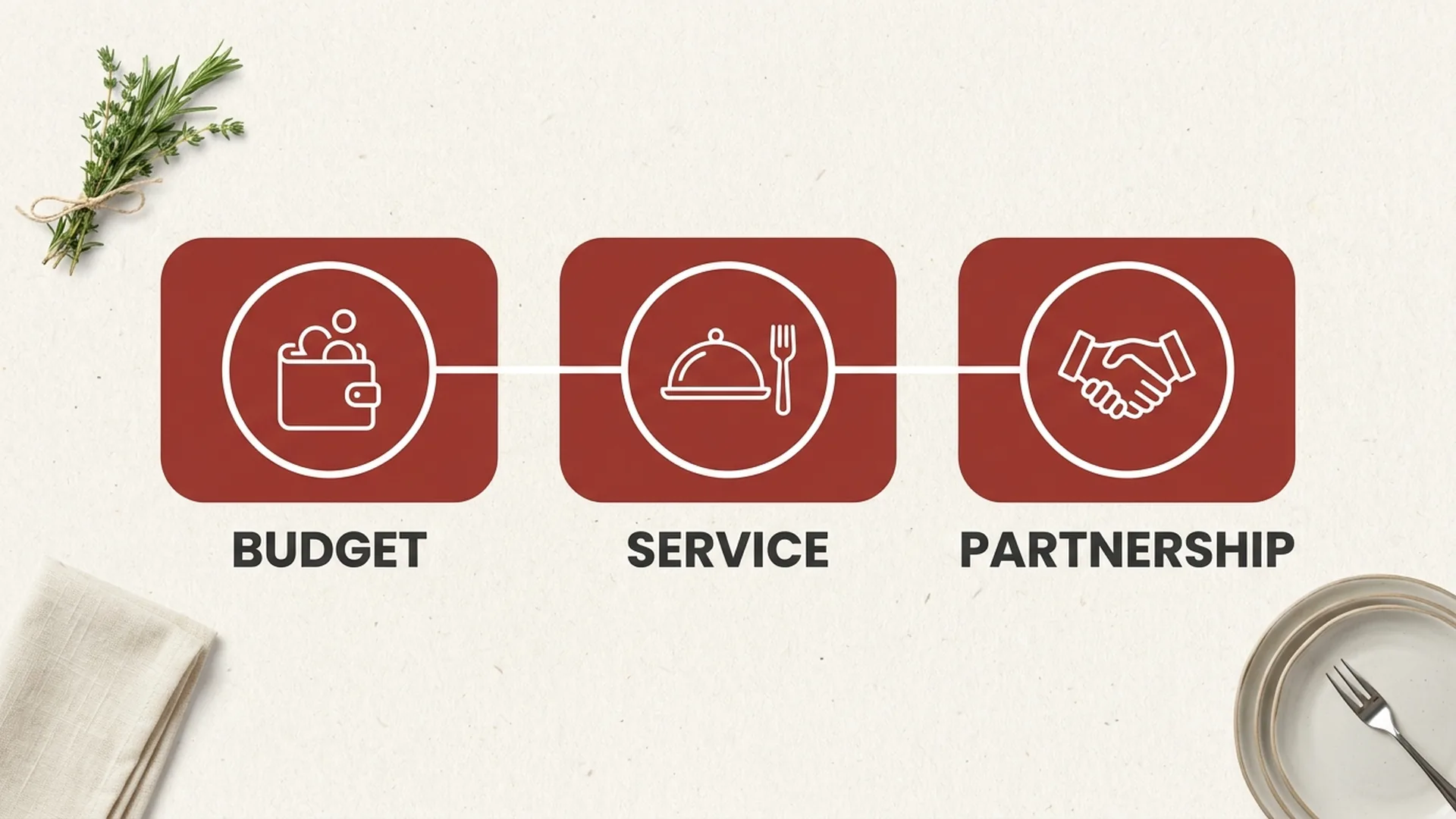
Key things to check on cost:
- Detailed cost breakdowns
- Any hidden fees
- How well packages scale up or down
- The value across different caterers
- Fit with your event budget
Learn about our flexible catering estimates to see how clear pricing makes planning easier. The goal is a partner who serves great food and still fits your budget.
The right caterer is an investment in the whole event. Take your time and compare your options, and you set yourself up for a meal guests remember for the right reasons.
Addressing Dietary Restrictions in Corporate Catering
Dietary needs matter more than ever in corporate catering. Today’s workplaces bring a wide range of diets and health needs. Handling them well shows that a company pays attention and cares about including everyone.
Understanding Dietary Diversity
Dietary restrictions come from many places: medical conditions, religious practice, ethical choices, and personal health goals. A caterer needs a plan that can handle that whole range without scrambling at the last minute.
The table below lays out common dietary restrictions and what each one requires.
| Dietary Restriction | Typical Requirements | Common Considerations |
|---|---|---|
| Vegetarian | No meat, fish, or poultry | Include plant-based proteins |
| Vegan | No animal products of any kind | No dairy, eggs, or honey |
| Gluten-Free | No wheat or gluten-containing grains | Use certified gluten-free ingredients |
| Dairy-Free/Lactose Int. | No milk or dairy products | Substitute plant-based milks and cheeses |
| Kosher | Meets Jewish dietary laws | Use a kosher kitchen or certification |
| Halal | Meets Islamic dietary requirements | Confirm all ingredients are halal certified |
| Nut-Free | No peanuts or tree nuts | Prevent cross-contact with nut ingredients |
| Low Sodium | Limited salt and sodium content | Choose heart-healthy, reduced-sodium options |

Menu Planning and Communication
Handling dietary needs takes a clear, organized plan. A caterer needs good communication to keep guests safe and happy. That means flexible menu options that still taste good and look good on the plate.
Key steps include:
- Asking about dietary needs when guests sign up
- Clear labels for ingredients and allergens
- Prep steps that prevent cross-contact
- Advice from nutrition experts when needed
- Options that feel welcoming, not limiting
Our customizable catering packages are built to handle specific dietary needs. The point is not just to check a box. It is to serve food that makes every guest feel looked after.
Handling dietary needs well is more than a logistics problem. It shows a company culture that values people and treats guests with respect.
The Role of Presentation and Service
Presentation and service are about more than getting food to the table. They tell guests how polished and careful the host is. Every plated dish and every chat with staff is a chance to back up the brand and give guests something to remember.
Visual Appeal and Plating
Research on food colour and perception shows that how a dish looks sets what people expect it to taste like, which shapes how much they enjoy it. Caterers plan meals that look as good as they taste, so the food comes across as made with care.
Presentation principles worth following:
- Colors that match the event theme
- Food arranged with height and structure
- Plating that highlights ingredient quality
- Serving vessels chosen to fit the food
- A look that matches how the food actually tastes
- A visual through-line across the whole spread
Service on the Day
Service is the human side of catering, and it is what sets a good event apart from a forgettable one. Well-trained staff put guests at ease, keep things moving, and leave a good impression of the company.
Service points that matter most:
- Well-trained, courteous staff
- Attentive service that anticipates needs
- Smooth, unobtrusive food delivery
- Quick response to guest requests
- A tidy presentation maintained throughout the event
Careful presentation and service change how a corporate event feels. Good catering is an experience for guests, not just a plate of food.
When the food, the staff, and the company’s tone all line up, guests walk away with a strong impression of the event.
Ready to Make Your Next Corporate Event a Success?
Partner with Lily’s Wings for affordable, flexible corporate catering built to fit every taste and every budget across Central Minnesota.
Lily’s Wings Burgers & Things · 1970 Sandstone Lp S, Sartell, MN 56377
Planning a corporate event is rarely simple. Choosing the right partner, juggling dietary needs, and getting the look right can turn a fun event into a stressful one. Handle it well, and a smooth event becomes a chance to impress your employer as the event manager. Want to see how simple planning can be? Get a free estimate today or call (320) 492-4097, and we will help you put on an event everyone remembers.
Frequently Asked Questions
What Key Factors Should I Consider When Designing a Menu for Corporate Event Catering?
Design your menu around dietary needs, the mix of guests, and event timing. Ask about guest preferences when they sign up so you can plan for everyone ahead of time.
How Can I Manage Dietary Restrictions for My Corporate Event?
Collect dietary preferences at registration and share them clearly with your caterer. Offer several customizable options that cover common needs, such as vegetarian, gluten-free, and dairy-free.
What Are the Logistical Considerations for Corporate Event Catering?
Plan for the timing of food prep and service, how many staff you need, and how to scale to your event size. Build a simple timeline showing when each dish is prepped and served so the day runs smoothly.
How Does Presentation Improve My Corporate Catering Experience?
Presentation shapes how happy guests feel and how good they think the food tastes. Balance eye appeal with real flavor by matching colors and using thoughtful serving styles.
What Steps Ensure Excellent Service at My Corporate Event?
Train staff in manners and attentive service, spell out who handles what, and set up a quick way to adjust during the event as things unfold.
How Do I Evaluate Catering Partners for My Corporate Event?
Check each caterer’s track record with corporate events, willingness to tailor the menu, and how polished the staff is. Use a short checklist covering experience, flexibility, and clear pricing to compare them fairly.